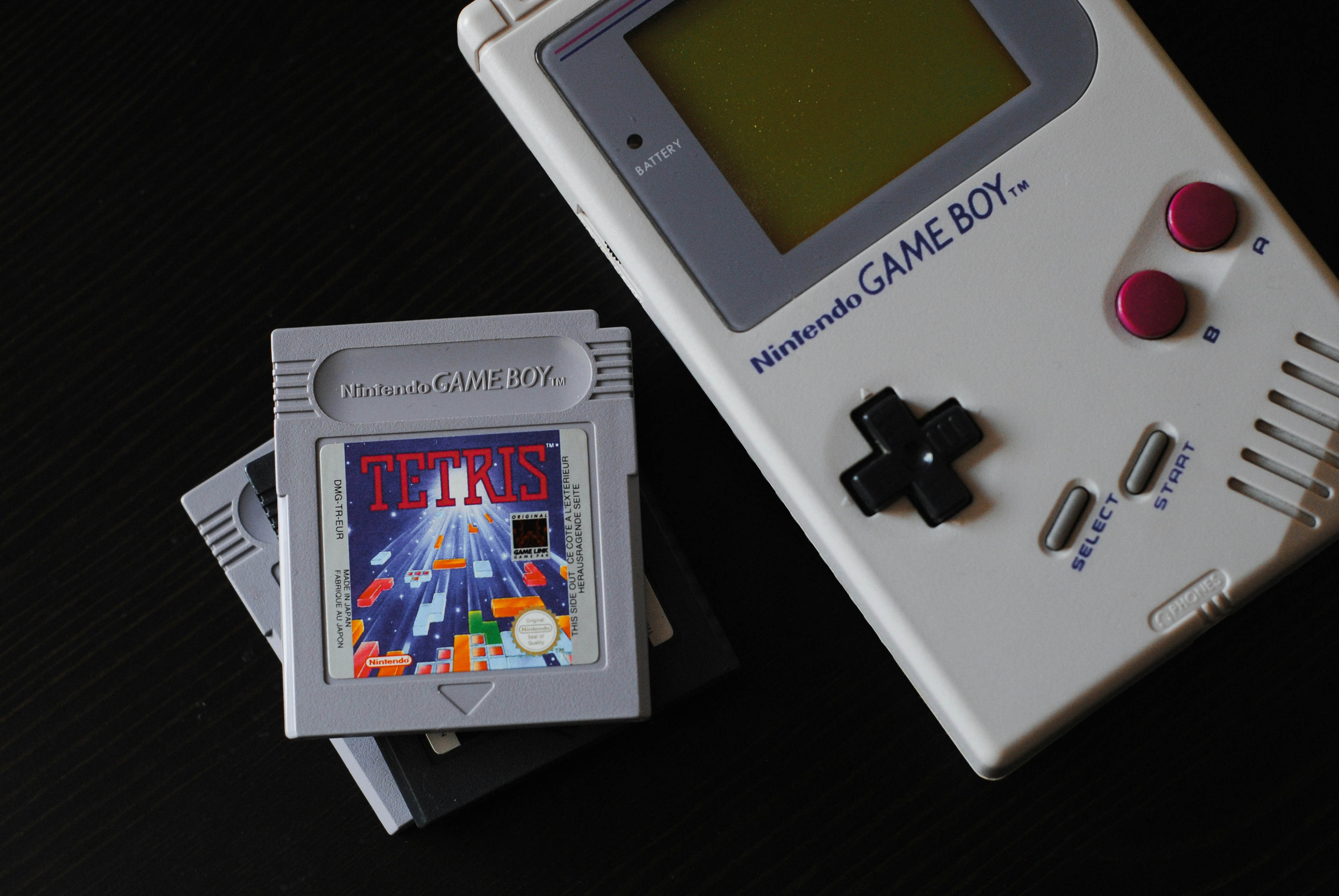
Ever since its creation in 1985 by Alexey Pajitnov, Tetris has reeled millions of users into spending hours watching the same shapes fall onto one other over and over again. The infamous game has expanded its influence from Nintendo Game Boys to the latest computers, from seniors to young children, and across the globe. But how did this happen and why is this important within our own lives?
Psychological Effects of Tetris
According to Pajitnov, “We all have a natural desire to create order out of chaos. The game of Tetris satisfies that desire on a very basic level.”
Despite this, Tetris and many other games employ a few more tricks. Psychologist Dr. Tom Stafford from the University of Sheffield attributes Tetris’ addictive quality to the Zeigarnik effect, where people remember unfinished tasks more easily because the human brain disposes of memories that are no longer useful.
In an article, Stafford writes, “Tetris holds our attention by continually creating unfinished tasks,” and later concludes, “[Tetris] creates a continual chain of frustration and satisfaction of goals. Like a clever parasite, Tetris takes advantage of the mind’s basic pleasure in getting things done and uses it against us.”
Another psychological effect associated with playing Tetris was even named after it: the Tetris effect, which occurs when devotion towards an activity causes it to pattern the thoughts, mental images, or dreams. After playing Tetris, you might envision Tetrominoes falling into each other, or even books sliding into shelves.
The Tetris effect occurs because the brain is constantly changing up neuronal connections to adapt to new environments and stimuli, especially when it recognizes patterns—a process known as neuroplasticity. Avid Tetris players develop new neural pathways, which combined with the brain’s skill at drawing mental representations, creates images of Tetris.
Tetris, along with millions of other games, often surprise us with the great psychoneurological impacts they can have. Further exploration holds valuable lessons on our brains.
Motivation

You might wonder: what decides whether we start that essay or turn to our phones?
As we experience daily life, our brains release neurotransmitters; when received by a neuron, neurotransmitters cause certain actions, helping neurons “communicate.”
One neurotransmitter, dopamine, plays a central role in communication within the brain reward system, an intricate network of interconnected brain regions known to make us feel good. When an action, such as eating, causes the release of dopamine, our body feels great and wants to repeat it. On the other hand, the brain can also have us feel pain so we avoid harm.
Therefore, the brain has a potent way of having us do what we have to for survival—but we know that in our modern world, not everything is life and death. That being said, we’ve found ways to leverage the brain’s system. This invaluable knowledge is key to the dynamic study of game design, from which Tetris and other captivating games are born.
Rewards
Games supply dopamine by having players overcome challenges that are engaging but not as frustrating as real life’s struggles before receiving a reward. Certain factors along the way help solidify their power.
Firstly, every detail of just how the reward is given can already be fine-tuned for the best effect.
Many games use a variable-rate reward schedule, meaning you get the reward after an unpredictable number of responses on your part. This yields a high and steady response rate (how much you interact) compared to giving rewards after an expected number of times or schedules messing with the predictability of how much time it takes to be rewarded.
The effect of variable-rate reward schedules can be seen through gambling’s addictiveness. Thinking each bet might be the one that makes you rich helps keep you betting.
Deciding what the reward is is another crossroads.
In Tetris, the player is rewarded by points whenever they clear lines. Harder tricks get more points whereas easier tricks get less. These points are a direct reflection of what you put into the game; your response to a game dictates how many points the game gives you. This makes you feel more connected to the game and your progress in it.
Points are something directly comparable. Players can easily compare their scores to their own high score, or see how they rank against others. Competition satisfies our innate desire to win, which stems from the high level of dopamine winning gives, encouraging continued play and improvement.
Emotional Impact

By immersing the player in an interactive environment with fantastical visuals and audio, games elicit a strong emotional impact. What you see in your day-to-day life can become repetitive and monotonous; we hardly give thought to office chairs or sink faucets but in contrast, every game you play is a new, memorable experience.
In fact, every feature of a game plays a role in player emotions. A trio of game designers, Robin Hunicke, Marc LeBlanc, and Robert Zubeck, proposed the Mechanics Dynamics Aesthetics (MDA) framework as a formal approach to analyzing how game functions connect to player feelings.
According to the MDA framework, the mechanics of a game affect “dynamics,” or how the game is played, which then affects “aesthetics,” or how the game feels. For example, in a classic shooter game, providing the player with very limited ammunition might cause the player to then feel cautious and fearful and shoot conservatively and strategically. On the other hand, a player with unlimited ammunition might feel more powerful and shoot recklessly.
Overall, the MDA framework models the complex relationship between game and player as a simple three-step path, helping us understand fundamental considerations in game design.
The Applications of Game Design
Given what games can hold over motivation and emotions, some have wondered whether this influence can be expanded to broader practices.
Luis von Ahn saw its potential in education and created the widely-known language learning app Duolingo. In his Ted Talk, von Ahn discusses how Duolingo was made to be addictive through the use of techniques such as streak counters, notifications, and short, game-like lessons.
The creation of more ways to learn has great implications. It can expand the general reach of education, allowing underprivileged people lacking money or time to learn. Duolingo, by at the very least providing a starting point for learning English, opens job opportunities to many.
By giving more people a chance to improve their lives and contribute to further global change, games can help in the fight for equality.
Gamification in Daily Life

Applying game-playing elements, a process known as gamification, can also be done by anyone to increase motivation and make tasks seem more manageable.
Popular examples include incorporating a step-count goal and setting rewards to increase motivation for exercise, implementing a progress bar when filling out a form, and competing with friends on finishing an assignment.
Games teach us that we have the power to work with, instead of against, our brains, making motivation seem less elusive. By learning psychology and neuroscience whilst applying it to the rising games in the creative technology industry, we can change existing systems to accommodate our personal needs.
References
- Edwards, Sarah L., et al. “Game-Based Learning in Neuroscience.” Neurology Journals, American Academy of Neurology, 29 Nov. 2023, www.neurology.org/doi/10.1212/NE9.0000000000200103.
- Franken, Robert E., and Douglas J. Brown. “Why Do People like Competition? The Motivation for Winning, Putting Forth Effort, Improving One’s Performance, Performing Well, Being Instrumental, and Expressing Forceful/Aggressive Behavior.” ScienceDirect, Elsevier, 13 Jan. 2000, www.sciencedirect.com/science/article/abs/pii/0191886995000355.
- Guy-Evans, Olivia. “Brain Reward System.” Simply Psychology, 14 Sept. 2023, www.simplypsychology.org/brain-reward-system.html.
- Halber, Deborah. “Motivation: Why You Do the Things You Do.” BrainFacts.Org, 29 Aug. 2018, www.brainfacts.org/thinking-sensing-and-behaving/learning-and-memory/2018/motivation-why-you-do-the-things-you-do-082818.
- Hunicke, Robin, et al. Northwestern University, MDA: A Formal Approach to Game Design and Game Research.
- Pass, Jon-Christian. “The Psychological Impact of Video Games.” Simply Put Psych, 20 May 2023, simplyputpsych.co.uk/gaming-psych/hnn25k4aykig1xu680ons7bqcz04jc.
- Schultz, Wolfram. “Neuronal Reward and Decision Signals: From Theories to Data.” Physiological Reviews, American Physiological Society, 1 July 2015, journals.physiology.org/doi/full/10.1152/physrev.00023.2014.
- Stafford, Tom. “The Psychology of Tetris.” BBC News, BBC, 24 Feb. 2022, www.bbc.com/future/article/20121022-the-psychology-of-tetris.
- “The Tetris Effect (Definition + Examples).” Practical Psychology, 12 Nov. 2023, practicalpie.com/the-tetris-effect/.
- von Ahn, Luis. “How to Make Learning as Addictive as Social Media.” TED, Apr. 2023, www.ted.com/talks/luis_von_ahn_how_to_make_learning_as_addictive_as_social_media.


Leave a Reply