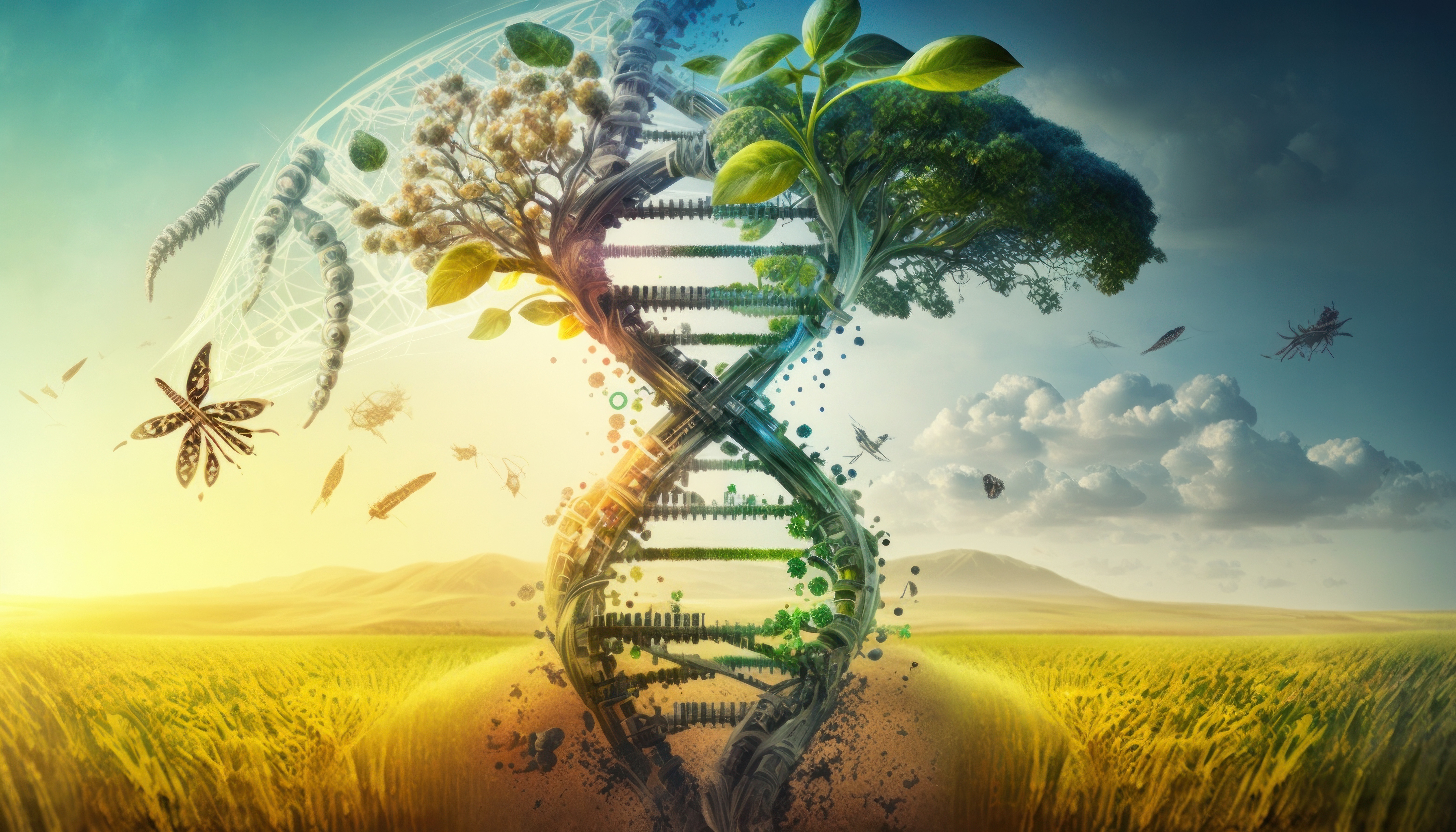

As the curtains of scientific exploration draw backward, picture yourself standing at the crossroads of transformation. Not before a screen or the pages of a familiar story, but on the threshold of synthetic biology—a groundbreaking frontier that beckons us to reshape the fundamental workings of life.
What is Synthetic Biology?
Synthetic biology represents the fusion of biology, engineering, and computer science. As defined by the Biotechnology Innovation Organization, “It aims at the (re-)design and fabrication of biological components and systems that do not already exist in the natural world.” The ability to engineer DNA, the building blocks of life, enables scientists to create organisms that serve specific purposes, pushing the boundaries of what once seemed impossible.
Currently, there are two main uses of synthetic biology:
- To generate artificial life by replicating behaviors observed in natural biology with synthetic molecules.
- To search for components in natural biology that can be interchanged and assembled into systems exhibiting unnatural behavior.
Why is Synthetic Biology Important?
Synthetic Biology’s purpose is to redefine the boundaries of life primarily through medical innovations and environmental solutions. Currently, scientists have done a lot with synthetic biology, including but not limited to:
- Utilizing microorganisms for bioremediation purposes, aiding in the purification of pollutants from water, soil, and air.
- Making bacterial genomes which are critical steps that pave way for achieving the ultimate objective of creating a fully synthetic, activated cell. This accomplishment was achieved in January 2008 by the JCVI (The Institute for Genomic Research).
- Creating synthetic life forms that have the potential to revolutionize medicine through the development of custom-designed cells for therapeutic purposes. This accomplishment was achieved in 2010 by the JCVI.

In the future, scientists plan to take these accomplishments and push the limits even further with bioengineering advancements. Fully developed targeted therapies and medicines can be available along with microorganisms for efficient biofuel production.
How is Art Used in Synthetic Biology?
Just as exposure to art induces neuroplastic changes in the brain, the design and creation of synthetic life forms engage our cognitive processes uniquely and profoundly. Shaping life from scratch requires an extensive understanding of biological mechanisms and an imaginative flair reminiscent of artistic expression.
Artists leverage their imaginative abilities to portray intricate scientific principles rooted in synthetic biology. Employing diverse visual platforms like paintings, sculptures, and installations, they skillfully transform scientific notions into captivating and comprehensible forms, thereby enhancing the accessibility of this field to a broader audience.
Especially with the growth of synthetic biology, art is becoming even more applicable to this field of science through BioArt. BioArt, short for Biological Art, is a genre of contemporary art that integrates biological materials, living organisms, and scientific processes into artistic expression.

What are the ethics surrounding Synthetic Biology?
The power to design life comes with a responsibility to ponder the potential consequences and ensure that bioengineering aligns with ethical standards. Many consider humans’ use of synthetic biology as problematic given the environmental impacts or even moral issues regarding who has access to a potential treatment.
Additionally, another topic of debate revolves around biosecurity, such as the synthesis of the polio virus, a high-risk infectious agent. Currently, institutions like the NIH have implemented biosecurity measures. Nevertheless, there is a prevailing sentiment among many that these measures fall short of justifying the potential harm that could result from a biological incident. These controversies underscore the ongoing debate regarding the adequacy of the safeguards enforced.
References
- “What Is Bio Art? – ARTDEX.” Artdex.com, 2019, www.artdex.com/what-is-bio-art/. Accessed 6 Jan. 2024.
- “Synthetic Biology Explained – BIO.” BIO, 2024, archive.bio.org/articles/synthetic-biology-explained. Accessed 6 Jan. 2024.
- Benner, Steven A., and A. Michael Sismour. “Synthetic Biology.” Nature Reviews Genetics, vol. 6, no. 7, Nature Portfolio, July 2005, pp. 533–43, https://doi.org/10.1038/nrg1637. Accessed 6 Jan. 2024.
- “Synthetic Biology.” Genome.gov, 2019, www.genome.gov/about-genomics/policy-issues/Synthetic-Biology. Accessed 6 Jan. 2024.


Leave a Reply