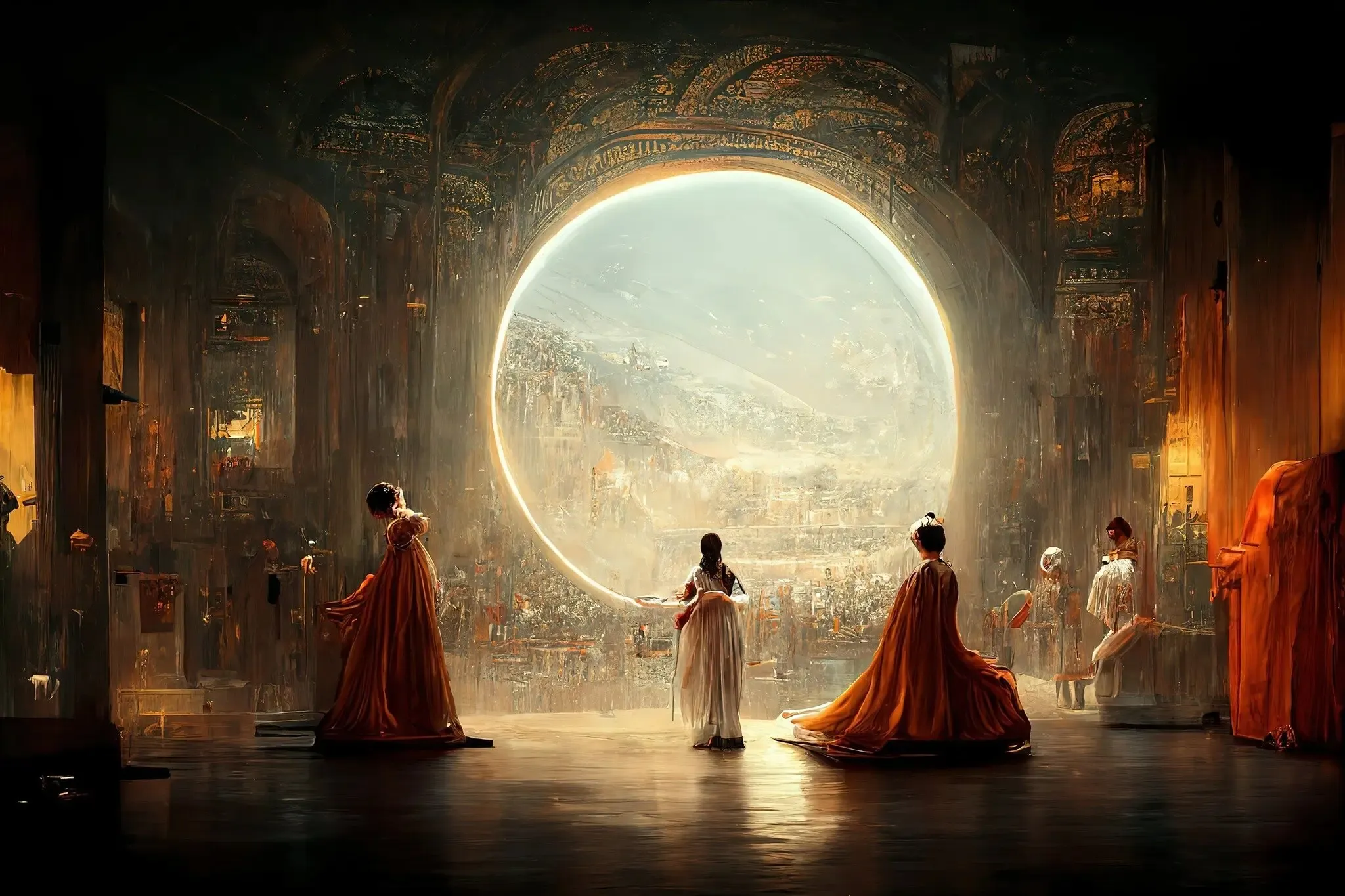
The AI art scene has been expanding faster than ever, enabling both excitement and concern among millions of artists.
Since the release of OpenAI’s DALL-E-2, a generative-AI system which produces unique images and portraits based on user prompts, the future of digital art has quickly taken a turn.
As AI becomes more commonly integrated into the art community, burning questions regarding the sustainability of AI art have risen: How is AI affecting artist careers? Does copyright exist in the AI art world? Where does tech meet AI art?

What is Generative AI and How Does it Work?
In order to understand the impacts of AI in the art community, it’s important to first be familiar with what generative AI actually is. In simple terms, Generative AI refers to the production of content either through text, images, or other means, based on a given input.
For instance, the infamous ChatGPT bot has surely enough established a dominant presence in the AI field, allocating users with a variety of quality content in response to questions, prompts, and even code that needs debugging.
Take a look at these examples of some fun user-prompts!
- Write me a poem about chicken piccata
- Write me a song about the relationship between the moon and the sun
- Pretend you’re from the movie Barbie and explain the concept of infinity to me
- If you could bring back any meme, what would it be and why?
Although being a consumer of AI technology can be easy, there’s a lot to learn about the complexity of how AI systems like ChatGPT and DALL-E-2 get their information.
AI systems rely on information already published on the internet in order to generate new content. The content, although original, actually reflects an accumulation of subject data of which patterns can be identified. For example, if a user asks ChatGPT to define the word “memory”, the AI system will surf the internet and browse for patterns or repetitive phrasing used in the definition of the word and proceed to use that information as a reference in its response.
AI Art Creates Concerns in Artists’ Careers
Generative AI comes with a vast amount of content forms but some of the most prominent being art forms which include, but are not limited to, unique digital images, poetry, novels, and even song lyrics.
Despite the popularity of AI art making its way into events such as art competitions and AI-art festivals, concerns regarding the sustainability of artist careers continue to rise.

According to Burak Ciftci in “Why some artists see AI-generated art as a threat to their livelihood”, some artists tend to believe that AI art lacks a sense of emotion and authenticity that is most commonly a result of human creativity. Although AI art can create unique and new perspectives by combining a diverse artistic styles and techniques, the products that are made as a result are often made without sincerity.
Similarly, Beautiful Bazarre states that “AI Art takes jobs from human artists, designers, illustrators, and uses their work without their consent or compensation to create what it calls “new work”. It also devalues the years of practice, unique vision, skill and experience that human artists work hard for”. Although generative AI art constantly creates new images, these “new” images are actually derived from a combination of art pieces and images from around the world.
Generative AI surfs the internet and inherits any relevant images that it can find when given a specific keyword. It will then proceed to create a “new” image which combines all of these images into one—essentially repurposing them. Although this may seem like a cool but complex process, the publishing and selling of AI art actually hinders the opportunities and necessities for artist careers.
Does Copyright Exist in the AI Art Community?
The short answer is no if you’re living the U.S. As of August 2023, AI Art can no longer be copyrighted under U.S. law which states that any work created by a non-human–including machines– would not be subject to copyright laws.

AI Art can only be generated through user-input, which means that although the AI system used is capable of creating the unique piece, the concept for the piece must come from the user.
Of course, the user-input is essential towards the development of the digital artwork itself. The product must be put together by web-browsing and combining an array of images within the same keyword(s). A “human authorship” is lacking whenever AI is involved in art creation, meaning that it is unethical for a humans to have the rights to own and take credit for an image, especially if the image was not entirely developed by them.
Why Care? This is Where Tech Meets Art
AI is only going to continue getting stronger. As more images are uploaded each and every day, the array of uniquely generated images will only become more diverse.
While being able to view and generate art entirely online may seem like purely an artistic process, there is actually more detail and logic that go behind the creation of these art pieces than some may think.

The programming that goes behind AI art systems is substantially logical: surfing the web and scraping images from multiple sources that contain similar patterns and details which mirror the user’s input ultimately highlights the complexion of AI technology behind its Art.
There are still so many unknowns about what is to come with the future of AI imagery, but it is crucial to recognize that despite the excitement that comes along with generating full-blown art in the matter of seconds, there is a lot more work that to be done in order to allow AI to be a tool for artists rather than be the artists themselves.
Sources
- https://www.sas.com/en_us/insights/analytics/what-is-artificial-intelligence.html#:~:text=AI%20finds%20structure%20and%20regularities,adapt%20when%20given%20new%20data.
- https://bootcamp.uxdesign.cc/why-some-artists-see-ai-generated-art-as-a-threat-to-their-livelihood-f4634b24a5ce#:~:text=Some%20artists%20believe%20that%20AI,the%20individuality%20of%20human%20expression.
- https://beautifulbizarre.net/2023/03/11/ai-art-ethical-concerns-of-artists/#:~:text=AI%20Art%20takes%20jobs%20from,human%20artists%20work%20hard%20for.
- https://www.nytimes.com/2023/08/21/arts/design/copyright-ai-artwork.html
- https://builtin.com/artificial-intelligence/ai-copyright
- https://www.nytimes.com/2022/09/02/technology/ai-artificial-intelligence-artists.html


Leave a Reply